
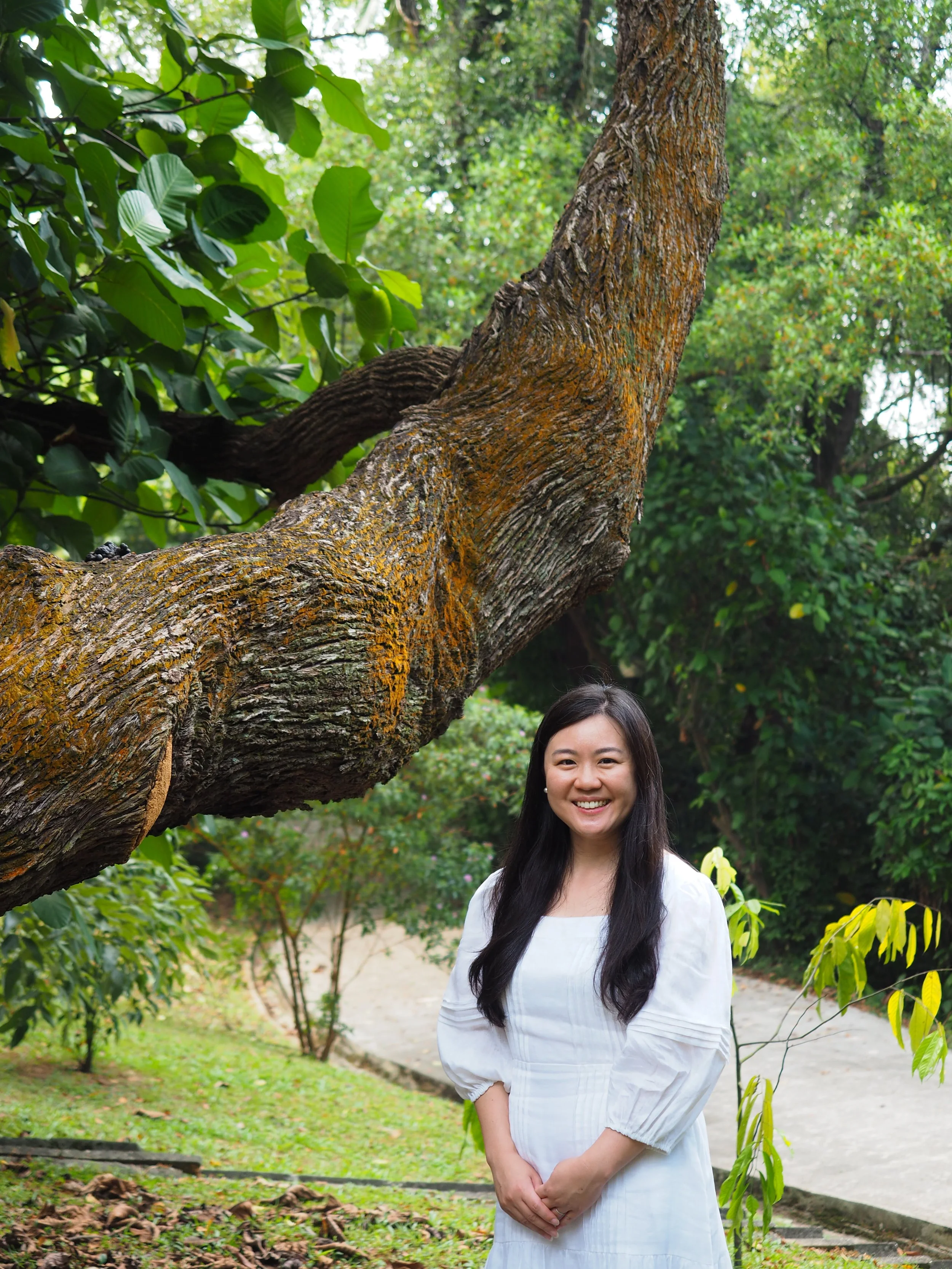
Meet Hui Fang (she/her)
Specialist Areas:
Mood, Anxiety, Trauma/Complex Trauma, Identity, Self-Worth, Emotional Regulation, Relationship Issues, Grief & Loss, Group Psychotherapy, LGBTQIA+
Age Group(s):
Older Adolescents, Adults
Approaches:
Psychodynamic and Attachment Focused Psychotherapy
Emotion-Focused Therapy
Group Psychotherapy
Schema Therapy
Focusing Oriented Technique
Eye Movement Desensitization and Reprocessing (Advanced)
Cognitive Behavioural Therapy
Language(s):
English, Conversational Mandarin
Outside the therapy room, Hui Fang is a devoted reader of mystery and fantasy, drawn to stories that unfold slowly and invite her to see the world through unfamiliar eyes. She also enjoys curating board games to play with her two “tweens”, discovering new ways to connect, laugh and spend time together.

Education and Awards:
Bachelor of Social Sciences (Honours) in Psychology from National University of Singapore
Master of Psychology (Clinical) from National University of Singapore
Ministry of Health Healthcare Graduate Studies Award (HGSA)
Professional Membership(s):
Registered Clinical Psychologist Singapore (SRP)
Registered Clinical Supervisor Singapore (SRP)
Full Member of Singapore Psychological Society (SPS)
Member of American Group Psychotherapy Association (AGPA)
Hui Fang’s clinical journey began with Cognitive Behavioural Therapy (CBT), where she learned to help clients understand the thinking and behavioural patterns that shaped their lives. Over time, she found herself drawn to the deeper emotional pain beneath their struggles, sensing that something was missing in her work. Discovering Emotion-Focused Therapy (EFT) became a turning point, offering her a way to work more closely with the emotional worlds of the people she meets.
Hui Fang resonates with the belief that emotions are like messengers; they tell us what hurts, what matters to us, and what we need. Pain may have an ugly history, but emotions are not our enemies. Even when confusing or overwhelming, they carry meaning. When people allow themselves to draw closer to their emotions, experience them, and develop a felt sense of what they mean, something meaningful can emerge. They may discover new emotional responses, greater self-compassion, a stronger sense of agency, and more flexible ways of relating to themselves and others.
Hui Fang also believes that emotions need not be faced alone, and that change unfolds through the experience of being together. A decade ago, participating in interpersonal process groups at a group psychotherapy conference profoundly shaped her understanding of relational healing and deepened her passion for group psychotherapy. She sees groups as offering a unique opportunity for people to discover themselves through their encounters with others. As relationships unfold, participants may find the courage to give voice to feelings they have long kept hidden, discover that expressing their needs need not threaten connection, and experience being accepted without having to become who they think others want them to be.
Whether working with individuals or groups, Hui Fang hopes to create a space where people feel safe enough to explore the parts of themselves they have learned to hide, question, or struggle to accept. For her, therapy is not about becoming less emotional, but about having one’s complexity met and understood in the presence of another. As Dr. Greenberg reminds us, “you cannot leave a place (emotion) before you first arrive at it.”
With more than a decade of clinical experience working with adolescents and adults across a wide range of psychological difficulties, Hui Fang invites people to come as they are. She is willing to join them in the fly jar, to understand how they got in and what it feels like to be inside, and to explore together the possibility of finding a way out.